
legal DJI Flip flight Romania
How to Fly DJI Flip Legally in Romania in 2026 — Complete Step-by-Step Guide
Romania drone law 2026: how to fly DJI Flip legally — UAS operator registration AACR, Open A1/A3 categories, ROMATSA geo-zones, Remote ID, checklist, and penalties.
· 14 min
Introduction
DJI Flip is one of the lightest and most portable drones on the market. Weighing under 249 g with a C0 label, it falls into the most permissive flight subcategory under European unmanned aircraft regulations.
Despite its compact size, Romanian law requires mandatory steps to fly legally — even with an ultra-light drone. Every operator must register, check flight zones, and respect altitude and distance limits.
This guide explains step by step how to fly DJI Flip legally in Romania in 2026: UAS operator registration, flight category, geo-zones, Remote ID, safety checklist, and recommendations for test flights after repairs.
What rules apply in Romania in 2026
Basic regulations
Since 1 January 2024, the EU has unified UAS regulations through Regulations (EU) 2019/947 and 2019/945. Romania applies these rules through the Romanian Civil Aeronautical Authority (AACR). Flight activities are divided into three categories:
- Open — low risk; most recreational and semi-professional flights.
- Specific — medium risk; requires authorization or standard scenario (STS/PDRA).
- Certified — high risk; complex operations similar to conventional aviation.
DJI Flip in the Open category
DJI Flip falls into the Open category, subcategories A1 and A3, because it has a C0 label and weighs under 249 g. General rules for this category:
- Maximum takeoff mass must be under 25 kg.
- Flight must be within visual line of sight (VLOS).
- Maximum permitted altitude is 120 m.
- Dropping objects from the drone or flying over crowds is not allowed.
- The operator must be registered with AACR and display the UAS code on the drone.
Remote ID — is it mandatory for DJI Flip?
EASA rules require drones labeled C1, C2, and C3 and drones operated in the Specific category below 120 m to have active Remote ID. DJI Flip is C0 labeled, so Remote ID is not legally required.
EASA recommends that older drones over 250 g be equipped with a Remote ID module. If you add an external module to Flip, it must be EU-compliant and display your operator code.
UAS operator registration — mandatory steps
Why register the operator?
In Romania, the UAS operator is registered, not the drone. Registration is mandatory if the drone has a camera — DJI Flip records 4K video — even if it weighs under 250 g. Without registration, flying is illegal.
How to register with AACR
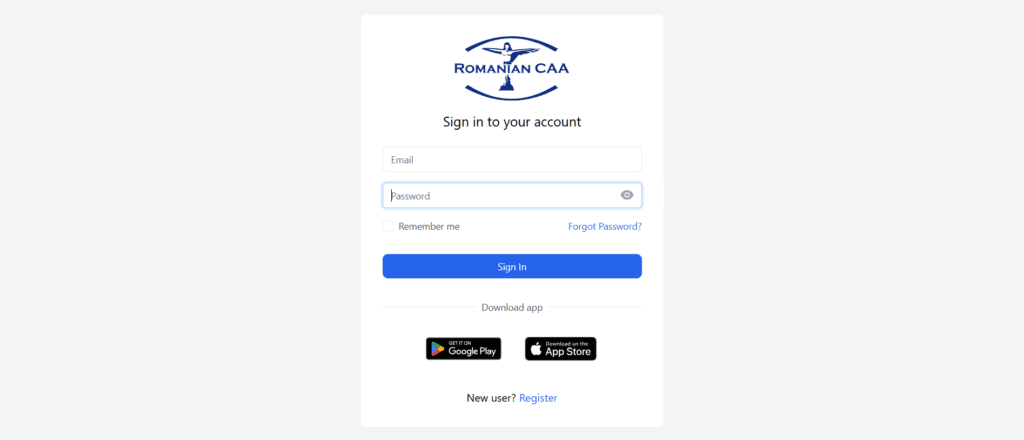
Registration is done on the official AACR platform (uas.caa.ro / caa.ro):
- Access the AACR platform — https://www.caa.ro
- Create an account with your personal details. You'll receive a unique operator code.
- Complete your profile with address, contact, and activity type.
- Pay the fee if applicable (Romania may or may not charge a nominal fee).
- Receive your UAS code by email. The code must be affixed to the drone (printable label) and entered in the Remote ID module if applicable.
- A1/A3 certificate — for A1 or A3 subcategory flights, complete the free online course and test on the platform.
- A2 certificate — required only for heavier drones (up to 4 kg) near people. Not needed for DJI Flip.
Flight category for DJI Flip
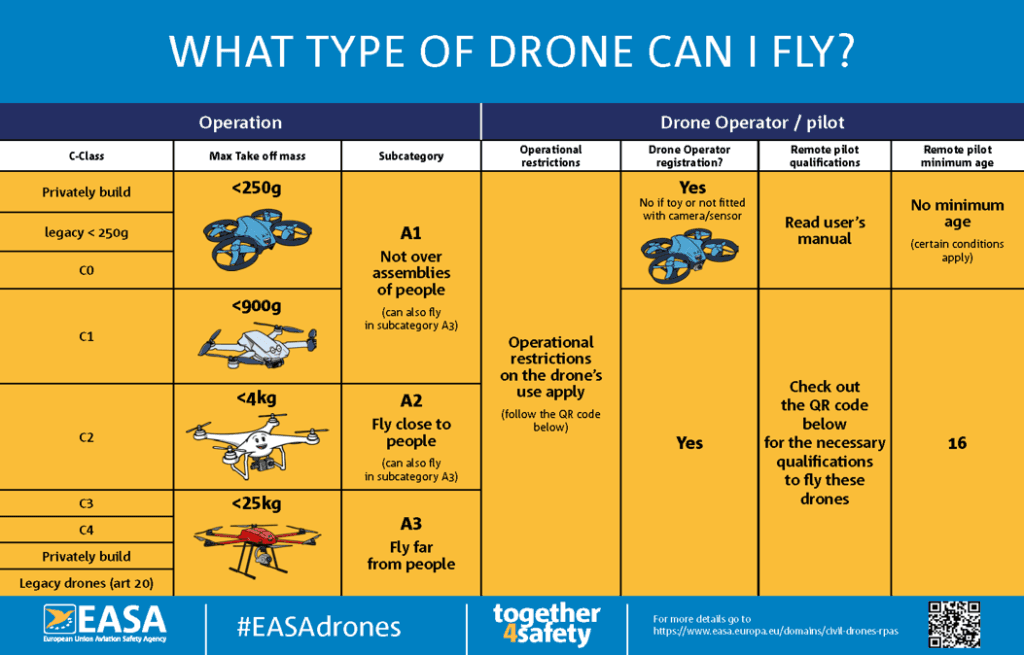
Subcategory A1 (C0)
DJI Flip weighs under 249 g with C0 label. It can fly in subcategory A1, which allows flight over uninvolved persons (but not over crowds):
- A1/A3 pilot certificate not required if the drone is under 250 g.
- You can fly in urban areas if you maintain reasonable distance from people and property.
- Don't fly over crowds and respect the 120 m altitude limit.
Subcategory A3 — ideal for test flights
For test flights or calibrations, choose subcategory A3 for extra safety:
- Flights take place away from people and buildings, at minimum 150 m.
- Ideal for testing a repaired drone or practice flights.
Where you can fly in Romania
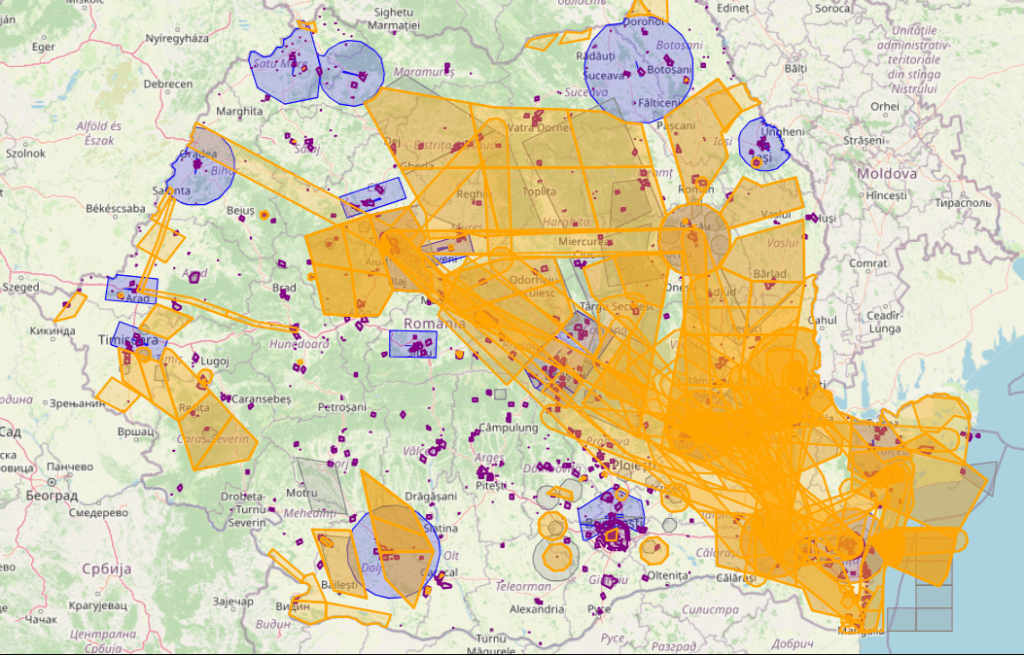
In Romania and the EU, airspace is divided into restricted zones. Before every flight, check the geo-zone map published by ROMATSA: https://flightplan.romatsa.ro/init/drones. It shows airport CTR zones, military areas, temporary restrictions, public events, and critical infrastructure.
Verification steps:
- Go to flightplan.romatsa.ro/init/drones.
- Select the area where you want to fly and check for restrictions.
- If the map shows red zones (prohibited) or yellow zones (restricted), cancel the flight or request approval in advance.
- In green zones, flight is permitted, but you must respect the 120 m altitude and avoid critical infrastructure.
Legal operating limits
For A1 and A3 subcategories, the limits are:
- Maximum altitude: 120 m from the nearest point on the ground.
- Visual line of sight (VLOS): the drone must remain in the pilot's field of view. Don't rely only on FPV signal or phone screen.
- Distance from people: in A1 you can fly over uninvolved persons, but not over crowds. In A3 maintain at least 150 m from people and buildings.
- Distance from airports: maintain at least 8 km from airports and airfields, unless local regulations say otherwise.
Legal flight checklist for DJI Flip
This practical checklist helps ensure you meet all requirements before takeoff:
- UAS operator registered — valid AACR code applied to the drone.
- A1/A3 certificate — not mandatory for drones under 250 g, but the online course is recommended.
- Remote ID — not mandatory for DJI Flip C0; if you install a module, register the operator code.
- Check ROMATSA map — don't fly in restricted zones.
- Battery charged and inspected — no swelling or defects.
- Firmware updated — drone, remote, app.
- Calibrate compass/IMU if in a new area.
- Check propellers and guards — DJI Flip has full propeller protection; ensure it's not damaged.
- Set altitude limit to 120 m in the app.
- No strong wind — strong wind increases drift risk.
Test flight after repair
If your DJI Flip has been through Service, the first flight requires maximum caution. We recommend subcategory A3: open area, away from people and buildings (150 m minimum), low altitude initially (under 30 m).
Before takeoff: calibrate IMU and compass, check gimbal and camera, test hover at 2–3 m for 30 seconds, then verify response to commands on all axes.
At DroneDoctor, every repaired DJI Flip is tested in our Service before return. After receiving it, a verification flight in safe conditions confirms everything works — with warranty up to 24 months.
Common mistakes and penalties
The most frequent mistakes by drone pilots in Romania:
- Missing operator registration — flying without a UAS code is illegal.
- Exceeding the 120 m ceiling — fines can be substantial and may involve equipment confiscation.
- Flying in restricted zones — ignoring geo-zones can endanger aircraft and attract criminal penalties.
- Flying over crowds — even with a drone under 250 g, flying over gatherings is prohibited.
- Neglecting pre-flight checks — firmware issues, faulty batteries, or cracked propellers can cause accidents.
Conclusion
DJI Flip offers freedom and versatility in an ultra-compact format, but flight legality must not be ignored. To fly legally in Romania in 2026, register as a UAS operator, follow Open category regulations, and always check flight zones.
The pre-flight checklist and post-Service test protocol help prevent problems and let you enjoy flying safely. Following these rules contributes to a responsible drone pilot community.
Need Service?
Send your drone for free